I get asked this question almost daily by both everyday consumers and brand managers looking for custom OEM solutions: "I just bought a premium docking station, or a brand-new monitor with a direct Type-C connection, but when I plug it into my laptop, the screen stays black with a 'No Signal' message. Is your cable defective?"
After over a decade in the electronic peripherals industry, I can tell you that in 80% of these cases, there is absolutely nothing wrong with the hardware. Instead, users have stumbled into one of the industry's biggest hidden pitfalls: Just because two USB-C ports look identical on the outside doesn't mean they share the same capabilities on the inside. Not every Type-C port is wired to handle video output.
Today, standing at the forefront of 2026's connectivity standards, we are going to cut through the dense academic jargon. Let’s break down exactly how USB-C video capabilities work, so you never buy the wrong accessory again.
Look Beyond the Surface: Does Your USB-C Port Actually Support Video Output?
Think of a data cable as a multi-lane highway, and the port on your laptop as the tollbooth. Some tollbooths only allow "Data" and "Power" vehicles to pass through. Others have built a dedicated VIP lane specifically for "Video" (often referred to as a video output protocol).
Currently, there are a few mainstream video lane technologies. The fastest way to determine your Type-C monitor connection capabilities is to check for specific physical symbols printed right next to the port.
1. Look for the "DP" Logo: DisplayPort Alt Mode
If you spot a logo that looks like a "D" with a "P" inside it next to your Type-C port, you're in luck. This indicates support for DisplayPort Alt Mode.
From the Engineer's Desk: This is the most common full-featured Type-C implementation today. It allows native, lossless video signals to travel directly through the USB-C physical pins. In 2026, a port with this logo can easily drive a 4K@60Hz display, and often much higher refresh rates. If you see this logo, you generally won't run into USB-C docking station compatibility issues.
2. The Lightning Bolt: The Thunderbolt Family
A prominent lightning bolt symbol means your machine is equipped with a Thunderbolt port, which offers massive data transfer rates alongside video capabilities.
Thunderbolt 3 / 4: While Thunderbolt 3 is older, Thunderbolt 4 remains a staple on many premium thin-and-light laptops. They are backward compatible with DP Alt Mode and can comfortably handle dual 4K or single 8K displays from a single port.
Thunderbolt 5 (The 2026 Premium Standard): Widely adopted in 2026 across high-end workstations and gaming rigs, Thunderbolt 5 offers a baseline 80Gbps of bi-directional bandwidth. In Bandwidth Boost mode (specifically for video-heavy workloads), it ramps up to a staggering 120Gbps, flawlessly supporting dual 6K or even 8K uncompressed external displays. With TB5, bandwidth bottlenecks on premium docks are essentially a thing of the past.
3. The USB4 Logo: The New Unified Standard
If you are using a non-Intel machine (like recent AMD Ryzen laptops), you might not see a lightning bolt. Instead, look for a logo that says "20Gbps", "40Gbps", or "USB4". Under current industry specifications, the vast majority of full-featured USB4 ports inherently mandate video output capabilities, making them a safe bet for external monitors.
Blind Navigation? How to Check System Specs When Logos Are Missing
Many modern laptop manufacturers prefer a minimalist design and completely remove all port labels. How do you identify your port then?
1. Consult the Spec Sheet: Don't rely on flashy e-commerce marketing copy. Go directly to the manufacturer's official support page and pull up the technical manual. Search the I/O or Connectivity section for keywords like DisplayPort, Alt Mode, or Video Output.
2. What if my laptop lacks these native protocols? If you are working with an older machine, or a budget laptop with "data-only" Type-C ports, are you locked out of a multi-monitor setup? Not necessarily. When designing deployment solutions for enterprise clients upgrading legacy hardware, we frequently utilize docking stations equipped with DisplayLink or Silicon Motion (InstantView) chipsets. This "software decoding" solution packages video signals into standard USB data, allowing you to force video output even through older USB 3.0 Type-A or data-only Type-C ports.
Buying Advice & Pitfall Avoidance: Insider Tips from Purplelec
Having deep roots in both the B2B and consumer electronics space, I've noticed a few recurring traps that buyers fall into:
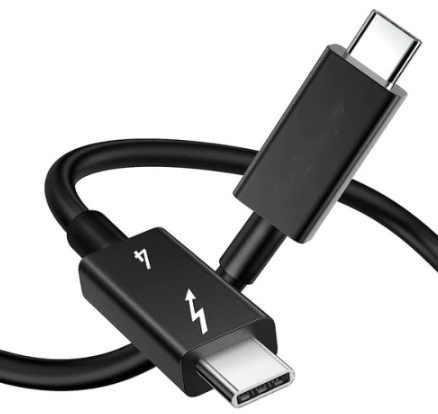
The Cable Matters as Much as the Port: Imagine pairing a top-tier Thunderbolt 4 laptop with an expensive 4K monitor, but connecting them with a cheap, charging-only "C-to-C" cable. The result? A black screen. Always ensure your cable is rated as "Full-Featured" or explicitly states its data transfer rate (e.g., 20Gbps/40Gbps).
Understand Bandwidth Allocation: Some budget docking stations struggle when pushed to output high-resolution video. They aggressively hog motherboard bandwidth, which can cause connected external hard drives to drop in speed or make wireless mice jittery. Choosing a professional brand like Purplelec—where internal PCB design and chipset selection are meticulously engineered—prevents these frustrating cross-interference issues.
FAQ: High-Frequency Questions About USB-C Video
Q1: Can every USB-C port connect to a monitor?
Absolutely not. USB-C is just the physical shape of the connector. Internally, it might only be wired for USB 2.0 speeds (capable only of slow charging and basic data transfer), or it could be a fully loaded Thunderbolt 5 port. You must verify protocol support.
Q2: My port has the DP logo, so why is my monitor capped at 4K 30Hz when connected through a dock?
This is almost always a bandwidth limitation caused by your dock or the cable, not the laptop. If the dock is trying to handle high-speed data transfers alongside video over an older DP 1.2 protocol, the refresh rate gets throttled. Upgrading to a quality dock supporting DP 1.4 or higher will resolve this.
Q3: Can I use a simple USB-A to USB-C adapter to send video to a Type-C monitor?
Not natively. Unless you are using an active adapter featuring a dedicated graphics chipset (like DisplayLink), a basic physical adapter cannot magically create a video signal channel out of a standard USB-A port.
Final Thoughts
Understanding the true capabilities of your USB-C ports is the crucial first step to building an efficient, headache-free multi-monitor setup. Don't be fooled by their identical physical appearance; look for the DP Alt Mode, Thunderbolt, or USB4 identifiers to ensure you are getting the most out of your hardware without wasting money on incompatible gear.
As a specialized manufacturer deeply embedded in the electronic peripherals industry, Purplelec is dedicated to providing connectivity solutions that work flawlessly from the underlying chipset logic to real-world application. Whether you need reliable, universally compatible USB-C docking stations for your office, or you are looking to develop custom OEM/ODM peripheral products for your brand, visit www.purplelec.com to connect with our senior engineering team for professional support and tailored solutions.