I. The Storage Paradox in the AI Era: New Opportunities for Le-gacy Technology
As artificial intelligence deeply permeates every industry, the pace of technological iteration is accelerating. A common misconception in the market is that emerging technologies will inevitably replace traditional ones entirely. However, in the storage sector, the exact opposite is true. As machine learning models drive an exponential increase in data throughput demands, the global digital economy’s reliance on highly reliable Hard Disk Drives (HDDs) has reached an all-time high.
The efficient operation of AI systems relies on the support of massive datasets, covering various modalities such as text, images, and video. According to IDC data, driven by the dual forces of AI and cloud computing, global data generation is projected to surge from 173.4 ZB in 2024 to 527.5 ZB by 2029. This trend has directly driven investment in infrastructure; as of June 2025, spending on data center construction hit a record high of $40 billion.
II. Reliability: The Lifeline of AI Model Training
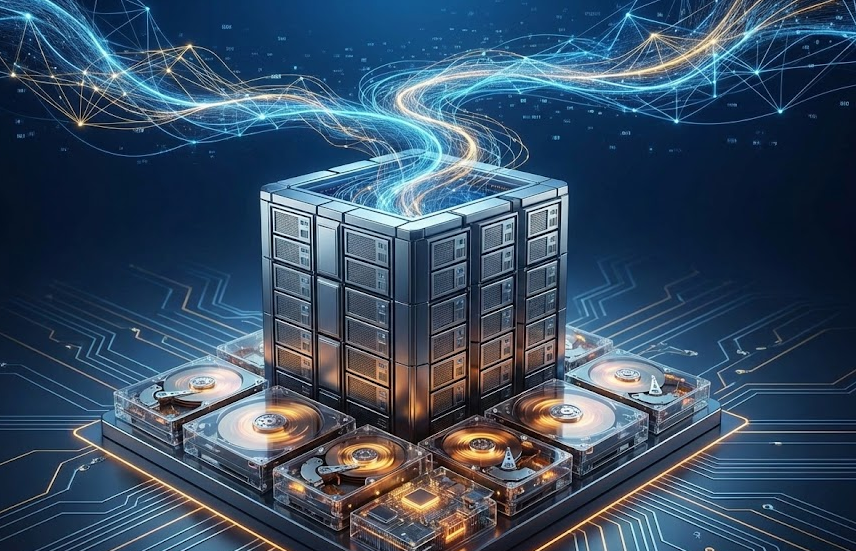
The Wall Street Journal has pointed out that artificial intelligence has a "voracious consumption" of digital storage, and HDDs play a critical role in this ecosystem. This is primarily due to their superior reliability. Enterprise users are well aware that training large AI models is an extremely resource-intensive process, often lasting weeks or even months. During this period, storage devices must maintain a 24/7 high-load read/write state. A failure in storage media leading to data corruption or loss not only implies massive sunk costs in time and money but could also directly result in the failure of the model training itself.
Stability testing for storage devices is crucial to meet the load demands of different application scenarios. Taking Western Digital as an example, the company not only conducts durability testing on HDDs under extreme conditions but also collaborates deeply with customers through its System Integration and Test (SIT) Labs to simulate real-world business scenarios. This end-to-end validation mechanism ensures that storage products can fully adapt to customers' specific AI workloads.
III. Cost-Benefit Analysis: The Economic Battle Between HDDs and SSDs
Beyond physical stability, Total Cost of Ownership (TCO) is another core factor determining the continued dominance of HDDs in data centers.
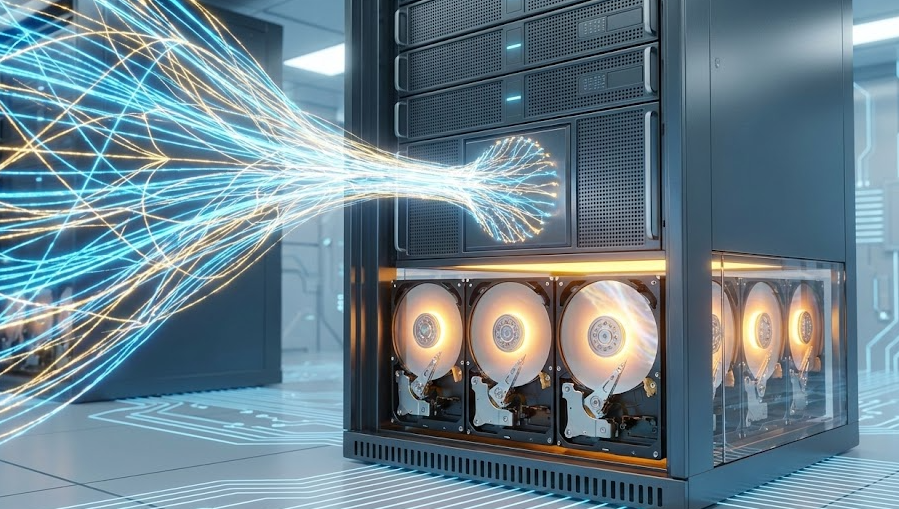
Although Solid State Drives (SSDs) possess natural advantages in access speed and data transfer, making them suitable for high-frequency "hot data" processing, HDDs demonstrate overwhelming cost-effectiveness in the economics of large-scale data storage. Currently, mechanical hard drives occupy approximately 80% of the data storage market share, and this proportion is expected to be maintained for the foreseeable future.
In actual data center operations, the vast majority of data belongs to lower-access "warm data" or "cold data." For this type of data, low latency is not the primary consideration; storage cost is key. With their low unit storage cost and competitive TCO performance, HDDs have become the optimal solution for building large-scale AI storage pools.
IV. Technological Evolution: Breaking Capacity Boundaries
To meet the demands of explosive data growth, the storage industry has not stopped innovating. Through the introduction of cutting-edge technologies like Heat-Assisted Magnetic Recording (HAMR), the single-disk capacity limit of HDDs is constantly being broken, further consolidating their cost advantage. Industry leaders like Western Digital are ensuring the continuous provision of high-density, cost-effective storage solutions through technological iteration.
It is worth noting that this wave of AI-driven storage growth differs from previous technology cycles. After enterprises complete AI model training, they often do not delete the original data but retain it long-term on mechanical hard drives for reuse. More crucially, generative AI itself is continuously churning out text, images, and video content; this incremental data requires massive physical space for hosting.
Conclusion
While SSDs garner significant attention in the field of high-performance computing, HDDs are recognized by industry analysts as indispensable infrastructure in the AI revolution due to their scalability, high storage density, and unparalleled cost-effectiveness. As the cornerstone of the data center, HDDs will continue to uphold this intelligent world that is increasingly dependent on data.