In the long journey of electronic hardware products from concept to the global market, the choice of supply chain model often determines the success or failure of a project. A complex hardware product may contain hundreds of components, involving multiple verifications from underlying firmware to high-frequency signal integrity. For brands or hardware startups, understanding and selecting the right manufacturing model is the core prerequisite for controlling risks and ensuring profit margins. This article dissects the various manufacturing models in electronics production and their operational management principles, drawing on over a decade of practical experience in Asian electronics manufacturing project management.
I. Definitions and Essential Differences of OEM, ODM, and JDM Models
The primary models in the electronic hardware manufacturing industry revolve around the distribution of "design ownership" and "manufacturing execution rights." Clearly defining these models is the first step in building a sound supply chain strategy.
OEM Manufacturing (Original Equipment Manufacturer)
The core of OEM manufacturing is "brand-designed, factory-assembled." The brand retains complete Intellectual Property (IP), product definition, Industrial Design (ID), Mechanical Design (MD), as well as the complete electronic circuit design and firmware code. The contract manufacturer is only responsible for component procurement, SMT (Surface Mount Technology), DIP (Dual In-line Package), assembly, testing, and packaging.
The classic industry example is the partnership between Apple and Foxconn. Apple not only provides the design but also deeply controls specific test fixtures and CNC machining parameters on Foxconn's production lines. In this model, the factory earns a Manufacturing Value Added (MVA) fee and does not share in the product's technological premium.
ODM Manufacturing (Original Design Manufacturer)
Compared to OEM, ODM manufacturing shifts the burden of research and development to the factory. The contract manufacturer has an existing product platform or a complete solution. The brand only needs to customize the appearance, tweak the software UI, or utilize white-labeling to bring the product to market.
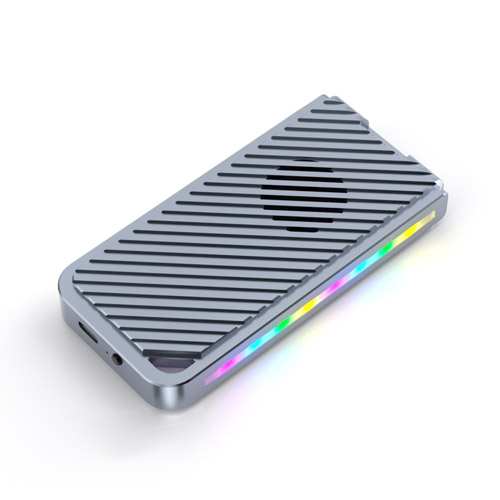
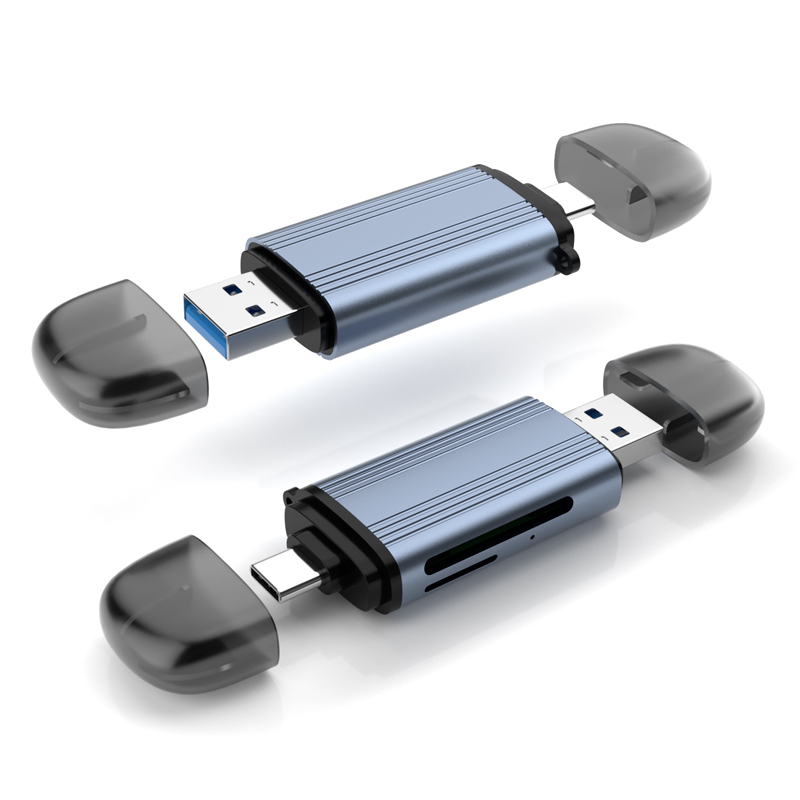
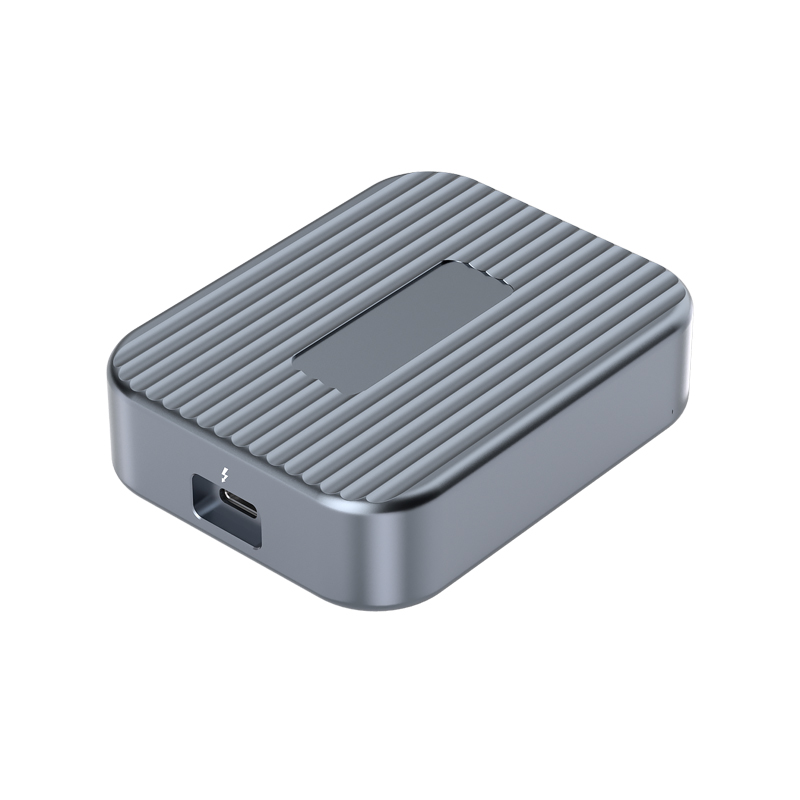
For instance, if a brand needs to quickly expand its product line with a 10-in-1 Type-C docking station or a basic SSD enclosure, developing it in-house might cost hundreds of thousands in R&D and take six months. Under the ODM model, they can simply select a public board solution that has already passed basic factory tests, modify the silkscreen and packaging, and achieve mass production within 45 days. In this model, the factory earns the overall product profit, which includes the design premium.
JDM (Joint Design Manufacturer)
JDM is a hybrid model that has become increasingly common for complex electronic products. The brand and the manufacturer are deeply integrated during the early concept phase, jointly funding or sharing R&D tasks. Typically, the brand is responsible for core algorithms, key IC selection, and product definition, while the factory handles structural cost reduction, PCB routing, and Design for Manufacturability (DFM). This model is frequently seen in high-end video capture cards or professional-grade computer peripherals with complex thermal requirements.
II. Application Scenarios Comparison
There is no absolute superiority among these models; the choice depends on the product life cycle, corporate capital, and Time to Market (TTM).
| Evaluation Metric | OEM Manufacturing | ODM Manufacturing | JDM (Joint Design) |
| IP Ownership | Fully owned by the brand | Owned by the factory (except partial custom exterior) | Co-owned or clearly divided by agreement |
| Time to Market (TTM) | Slow (Usually 6-12 months) | Fast (Usually 1-3 months) | Medium (Usually 4-8 months) |
| R&D Investment | Extremely high (Brand bears all failure risks) | Extremely low (Factory amortizes R&D costs) | Medium (Costs and risks are shared) |
| NRE Cost Structure | Full payment for molds, fixtures, and testing | Usually waived or minimal custom tooling fees | Varies by agreement, often significantly reduced |
| Profit Margin | High (Brand controls core costs and pricing) | Low to Medium (Factory earns R&D profit) | Medium to High (Balances cost and risk) |
| Supply Chain Control | Extremely strong (Can specify Tier-2 suppliers) | Weak (Factory controls BOM and alternative parts) | Strong (Jointly decide core materials) |
| Applicable Scenarios | Core flagship products, high tech barrier hardware, disruptive innovations with unique algorithms | Fast market-fill accessories, highly mature red ocean products, test products | Complex peripherals needing factory DFM to reduce costs |
III. Supplier Qualification Evaluation Standards (Certification, Audit, and NPI Process)
Screening an electronic manufacturing supplier capable of a long-term partnership cannot rely solely on a commercial quotation. A comprehensive qualification system must delve into the factory's quality management system and engineering introduction capabilities.
Basic Qualifications and Industry Certifications
The primary thresholds are ISO 9001 (Quality Management System) and ISO 14001 (Environmental Management System). Depending on the target market, it is necessary to verify the factory's experience with specific certifications, such as FCC for North America, or CE and RoHS directives for Europe. For smart hardware involving complex software interactions, evaluating whether the R&D team holds a CMMI (Capability Maturity Model Integration) Level 2 or higher certification is an effective way to mitigate indefinite firmware delays.
Factory Audit
An in-depth shop floor audit is the key to assessing a supplier's true capabilities. Senior supply chain managers focus on three main areas:
1. SMT Workshop: Observe the brand and precision of the placement machines. Check if the SPI (Solder Paste Inspection) after printing and the AOI (Automated Optical Inspection) after the reflow oven are operational. The isolation of the rework area for defective products is a direct indicator of the factory's quality control baseline.
2. Burn-in Room: Infant mortality defects in electronic products must be exposed before shipping. Observe the temperature settings (usually 40°C-50°C) and whether full-load tests are conducted under power.
3. Material Storage: Whether moisture-sensitive components (like core processors or specific sensors) are stored in dry cabinets with temperature and humidity logs directly impacts the final product's yield rate.
New Product Introduction (NPI) Process Review
The strictness of a factory's NPI process determines the survival rate of an OEM project from drawing to mass production. A qualified factory must have clear Stage-Gate management:
• EVT (Engineering Verification Test): Focuses on resolving fundamental design bugs. The factory produces initial PCBA prototypes to verify core functions, Power Integrity (PI), and Signal Integrity (SI).
• DVT (Design Verification Test): Full tooling opens. Focuses on mechanical structures, drop tests, thermal shock tests, and comprehensive EMI/EMC pre-testing. Derating Design evaluation is critical here; actual operating parameters of components should not exceed 70%-80% of their rated specifications to ensure long-term reliability.
• PVT (Production Verification Test): Production line trial. Hundreds of units are produced using standardized Standard Operating Procedures (SOP) and mass production fixtures. This assesses the First Pass Yield (FPY) and Units Per Hour (UPH). MP (Mass Production) can only be authorized when the PVT yield reaches over 95%.
VI. Intellectual Property Protection Mechanisms
In the Asian supply chain ecosystem, IP protection cannot rely on post-event litigation; it must be implemented through upfront contractual constraints and physical technical isolation.
Signing an Exclusive NNN Agreement
Traditional NDAs are often inadequate in cross-border manufacturing. The professional approach is to sign an NNN agreement:
• Non-Disclosure: Prohibits leaking product drawings to any third party.
• Non-Use: Prevents the factory from using the brand's designs for their own ODM product lines or other clients' projects.
• Non-Circumvention: Prevents the factory from bypassing the brand to sell directly to the brand's end customers at bottom prices.
The agreement must specify highly deterrent and quantifiable liquidated damages, under the jurisdiction of the courts where the factory is located.
Tiered Technical Disclosure and the "Black Box" Strategy
In OEM projects, never reveal complete core technical data upfront. Tiered technical disclosure is standard practice:
During the Request for Quote (RFQ) stage, provide only 3D exterior models and rough block diagrams with core IC part numbers removed. Once cooperation is established, provide complete drawings containing "black boxes."
For core commercial firmware, the brand should retain the final programming rights. In practice, Secure Boot can be set in the main control chip; the factory handles hardware assembly, and the brand's automated testing software uses encrypted tokens to flash and activate the core firmware online at the end of the line. This hardware-software decoupling is the most effective way to prevent unauthorized overproduction (gray market products).
V. Cost Structure Transparency Requirements
Cost transparency is the cornerstone of a healthy manufacturing relationship. Requesting a detailed BOM cost structure is mandatory for professional buyers.
Require Open BOM Quotations
Many low-end ODM factories provide a Turnkey Price, obscuring true material costs and profit margins. A qualified quotation should clearly break down:
1. Main ICs and Active Components: Controllers, memory, etc. These usually account for 40%-60% of the hardware cost.
2. Passive Components and Electromechanical Parts: Capacitors, resistors, PCBs (must specify layers and materials, e.g., 6-layer FR4), and connectors.
3. Structural Parts and Packaging: Plastics (ABS/PC), aluminum profiles (CNC and anodizing costs), color boxes, and manuals.
4. MVA (Manufacturing Value Added): SMT placement fees (per joint), DIP fees, and manual assembly/testing labor costs.
5. Yield Loss and Profit: Acceptable material loss is usually 1%-3%. After calculating all costs, the factory's net markup should be clearly listed, typically between 8%-15%.
Handling NRE (Non-Recurring Engineering) Costs
In the early stages, tooling, custom test fixtures, and certification testing fees are collectively called NRE costs. The contract must clarify whether NRE is a one-time buyout or amortized over the first batch's unit price. If paying in full for tooling, the contract must state "tooling assets are owned by the brand," allowing the brand to transfer the molds to a backup supplier if necessary.
Building a standardized system from the NPI process to BOM cost auditing is the moat for successfully launching electronic hardware and maintaining competitiveness. Supply chain management is not simply about asking for the lowest price, but about building long-term, strategic, symbiotic relationships with high-quality manufacturing resources through strict IP protection and rational profit distribution.