In daily IT device deployment and office scenarios, it is common for external devices to become unresponsive immediately after being connected to a computer. For example, a newly connected webcam flashes its indicator light but outputs no image, or a printer receives a command but refuses to execute the print job. Such issues are usually not caused by hardware damage but involve the underlying communication logic of the computer system. When a peripheral fails to operate as expected, troubleshooting typically focuses on one of the four core components of the system: hardware, software, firmware, or drivers.
Understanding the clear definitions of these four terms and their interdependencies is a prerequisite for systematic troubleshooting of device connection failures.
Hardware: The Physical Carrier of the System
Hardware refers to the physical entities that make up a computer system. It includes the host machine, peripherals (such as mice, monitors, multi-function docking stations, storage arrays), and all components with a physical structure.
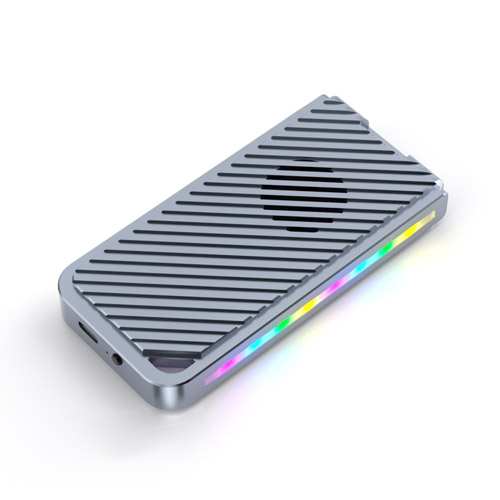
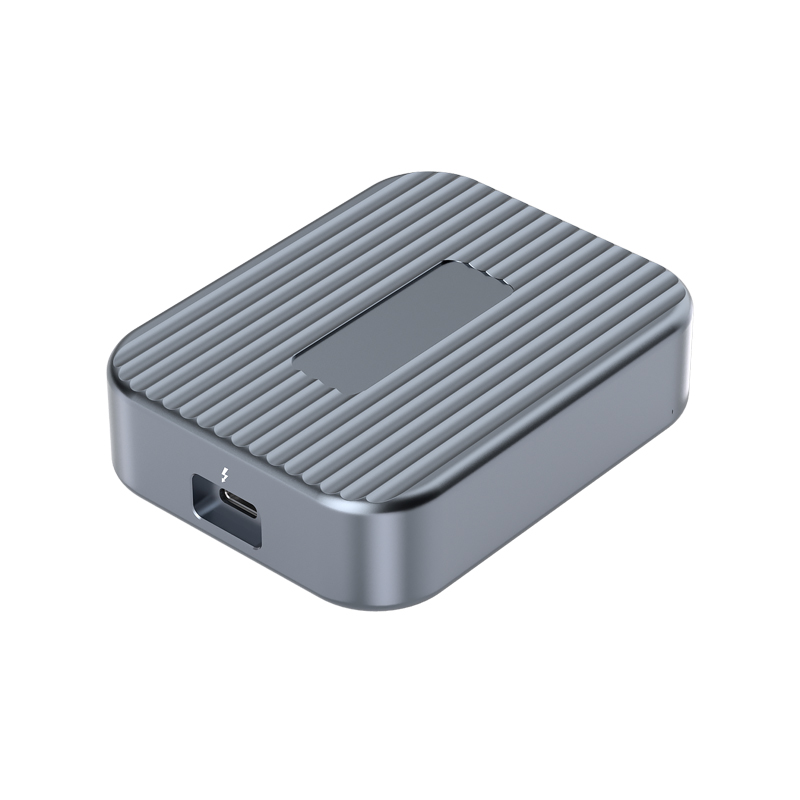
Taking a full-featured video docking station as an example, its aluminum alloy casing, multimedia display interfaces, data transfer ports, and internal power supply modules all fall purely into the hardware category. Hardware forms the physical foundation for the entire system's operation, providing the physical environment and interfaces for executing tasks. However, without scheduling from higher-level instructions, hardware is merely a collection of silent electronic components.
Software: The Device's Instruction Set
Software is a collection of digitized programs that issue operational instructions to hardware. It encompasses the operating system, various applications, and underlying control logic, responsible for defining the operational processes and business logic of hardware devices.
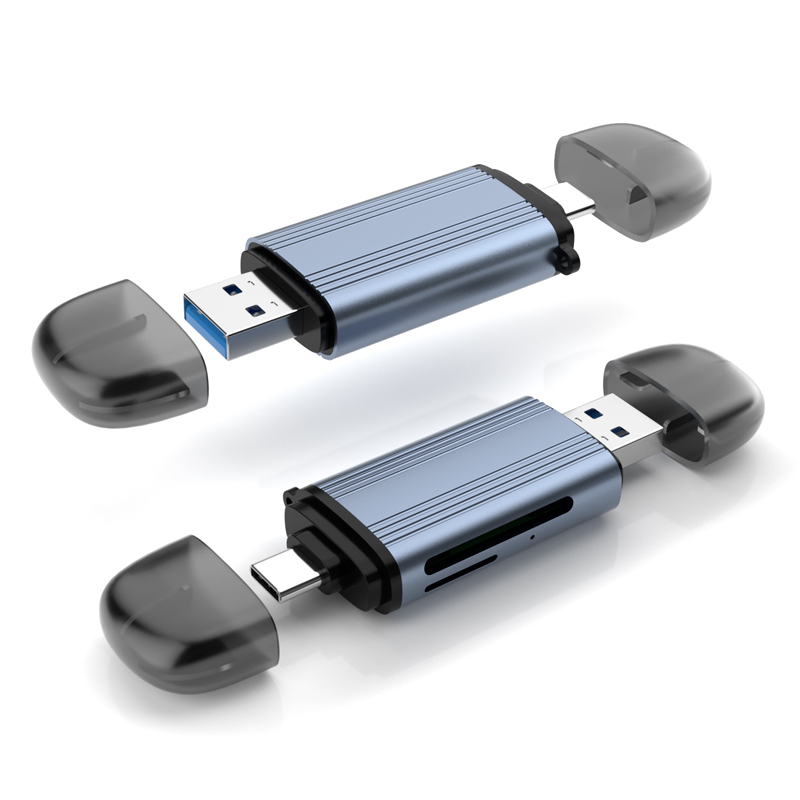
For instance, a dedicated synchronization program controlling data migration between two devices, or an office suite used for processing documents, are specific manifestations of software. It gives physical devices their actual execution purpose, enabling lifeless electronic components to complete complex computing and interaction tasks.
Drivers: The Translators of Underlying Protocols
A driver is essentially a specific type of software whose core responsibility is to act as a communication bridge between the operating system and specific physical hardware.
Operating systems typically cannot be shipped with built-in underlying recognition capabilities for all commercially available external devices. Drivers are responsible for translating the operating system's general instructions into machine language that specific hardware can parse. For example, certain high-end video expansion devices rely on specific display drivers to achieve underlying video signal encoding, decoding, and output. Without a matching driver, the computer system cannot detect the hardware's existence or invoke its core functions, resulting in the device being unavailable or operating in a degraded state.
Firmware: Control Logic Embedded at the Lowest Level
Firmware is a micro-system software programmed or embedded directly into the hardware itself. It controls the most fundamental, lowest-level physical and electrical behaviors of the device.
Firmware begins operating the instant the device is powered on, without waiting for the computer's operating system to load. Take a power supply device with smart power allocation technology as an example: its internal control chip can automatically negotiate protocols and allocate the required precise power the moment a terminal is connected. This process is completed entirely autonomously by the firmware, requiring no software configuration on the user's desktop. Firmware provides the initial operational rules and foundational security safeguards for the hardware.
The Synergistic Communication Mechanism of the Four Components
To understand this more int-uitively, we can analyze the collaborative workflow of each component through the scenario of connecting and enabling a new webcam for a video conference:
1. Hardware: The webcam itself is connected to the system as a physical information collection terminal.
2. Firmware: Upon powering up, the internal firmware immediately activates the sensor and image control chip, manages its own power supply, and prepares to send the video data stream.
3. Driver: The computer's operating system accurately identifies the hardware ID of the webcam by loading the corresponding driver protocol and establishes a stable data communication channel.
4. Software: The video conferencing application calls the operating system interface to acquire the video data stream, ultimately rendering the image on the graphical user interface.
Only when the instruction flow and communication protocols of these four stages perfectly match can the device achieve a seamless plug-and-play experience.
The Operational Value of Mastering Underlying Logic
Clarifying the operational mechanisms and technical boundaries of hardware, software, firmware, and drivers holds significant value for improving IT asset management and troubleshooting efficiency:
Accurate Fault Localization: When faced with an unresponsive device, you can quickly determine whether a system driver update is needed or if an underlying firmware upgrade should be executed.
Reduced Communication Costs: When interfacing with device manufacturers or technical support teams, using accurate technical terminology to describe fault phenomena significantly shortens the troubleshooting cycle.
Optimized Device Compatibility: Through scientific system updates and driver maintenance, unnecessary hardware replacements caused by software-level protocol mismatches or device misjudgments can be avoided.
Frequently Asked Questions (FAQ)
Q: Can hardware work independently without a driver?
A: Generally, no. Hardware must rely on communication instructions issued by software and drivers to execute tasks. Hardware without driver support only possesses physical connectivity and cannot achieve functional data interaction.
Q: What is the core difference between firmware and drivers?
A: Their storage locations and functions differ. Firmware is typically programmed into an independent storage chip within the external hardware device, managing the device's own underlying physical functions. Drivers, on the other hand, are installed within the host (computer) operating system, responsible for logical communication conversion between the OS and external hardware.
Q: Is it mandatory to regularly upgrade device firmware?
A: It depends on the specific situation. Common compatibility issues are usually resolved by updating host-side drivers or applications. Firmware updates inherently carry a certain level of risk and are primarily used to patch underlying logic flaws or optimize physical performance. Generally, firmware upgrades are only recommended when troubleshooting complex faults or when the device manufacturer releases a critical update.
Q: Why do some peripherals support plug-and-play while others require manual driver installation?
A: Basic devices that support plug-and-play (such as standard mice and keyboards) typically follow industry-standard protocols, and mainstream operating systems come pre-installed with generic drivers for them at the lowest level. However, complex peripherals with special features, high-performance requirements, or proprietary protocols must rely on dedicated drivers provided by the manufacturer to establish correct communication mechanisms.