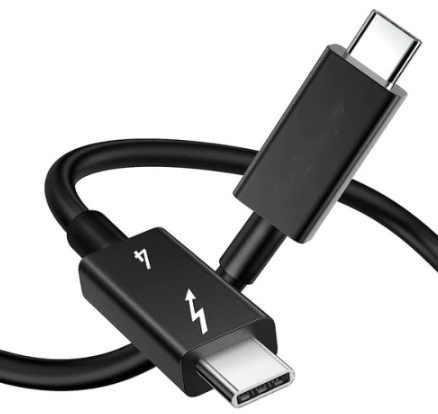
High-frequency trading, hardware compiling, and post-production setups default to dual 4K or 8K external monitors. Yet, users constantly experience screen flickering, refresh rates dropping to 30Hz, or peripheral disconnections when deploying standard hubs. The bottleneck lies strictly in the physical bandwidth of the underlying interface protocol, not the monitor panels. To resolve data congestion and output high-resolution multi-screen setups, integrating a true thunderbolt docking station remains the sole technical pathway. This technical breakdown strips away marketing terminology to analyze PCIe tunneling and dynamic bandwidth allocation, detailing why standard protocols fail under enterprise workloads.
Protocol Limitations: The Physical Bounds of a usb type c docking station
Standard USB-C interfaces rely heavily on DisplayPort Alternate Mode (DP Alt Mode) to transmit video streams. Within a strict 5Gbps or 10Gbps total bandwidth ceiling, the internal pins of the interface undergo forced physical division.
Outputting a single 4K@60Hz video signal consumes four high-speed transmission lanes. The remaining data transmission lanes are heavily bottlenecked, forcing the USB interface data throughput to revert to the legacy USB 2.0 (480Mbps) standard. If a user connects a portable SSD demanding USB 3.0 speeds, the video output is immediately downgraded to 4K@30Hz or 1080P. This physical zero-sum game is why a standard usb type c docking station fails to simultaneously sustain ultra-clear video passthrough and high-speed data throughput.
Bandwidth Allocation: The Core of a laptop docking station and dual monitors Setup
The Thunderbolt 4 protocol restructures the underlying logic of data routing. It operates on a 40Gbps bidirectional total bandwidth and mandates a minimum PCIe data transmission rate of 32Gbps at the motherboard and controller level.
When constructing a laptop docking station and dual monitors topology, Thunderbolt 4 utilizes Dynamic Bandwidth Allocation. Video signals (DP 1.4) and data signals (PCIe/USB) share the identical physical tunnel. The controller pre-calculates and reserves the specific video bandwidth required for dual 4K@60Hz or single 8K@30Hz (approximately 12-18Gbps). The massive remaining redundancy is then released entirely to data throughput. This dynamic scheduling ensures that under heavy dual-screen video loads, NVMe solid-state drives and gigabit Ethernet peripherals maintain maximum operational speeds without data collision.
Hardware Verification: Selecting a Professional docking station for laptop
Enterprise procurement teams and hardware engineers must verify three core hardware parameters when filtering a docking station for laptop, ignoring basic retail claims:
1. PCIe Bandwidth Minimums & Intel Certification: Non-certified units often market a 40Gbps peak while only allocating 16Gbps to PCIe functionality. This creates a hard ceiling for external GPU (eGPU) or Direct Attached Storage (DAS) performance. Verifying the official Intel certification badge is the most direct method to mitigate this risk.
2. Daisy Chain Topology Support: The Thunderbolt 4 protocol permits the sequential connection of up to 6 external devices. This requires the dock to feature a dedicated downstream Thunderbolt port, rather than a standard USB-C data port.
3. Power Delivery (PD 3.0/3.1) Scheduling: The main controller must supply a stable 85W-100W upstream charge to the host machine to manage power distribution and thermal loads when all peripheral ports are saturated.
Video Output Conversion Latency: The Hidden Cost of an hdmi docking station
Users frequently default to hardware with multiple integrated HDMI ports. A native hdmi docking station typically utilizes an internal MST (Multi-Stream Transport) chip to translate source DP signals into HDMI signals. This physical translation process injects 1-3ms of hardware latency and introduces the risk of chroma subsampling compression (forcing YCbCr 4:2:2 output). For colorists or visual designers requiring a lossless 4:4:4 color space, routing native DP signals directly through a downstream Thunderbolt port is technically superior to relying on HDMI translation.
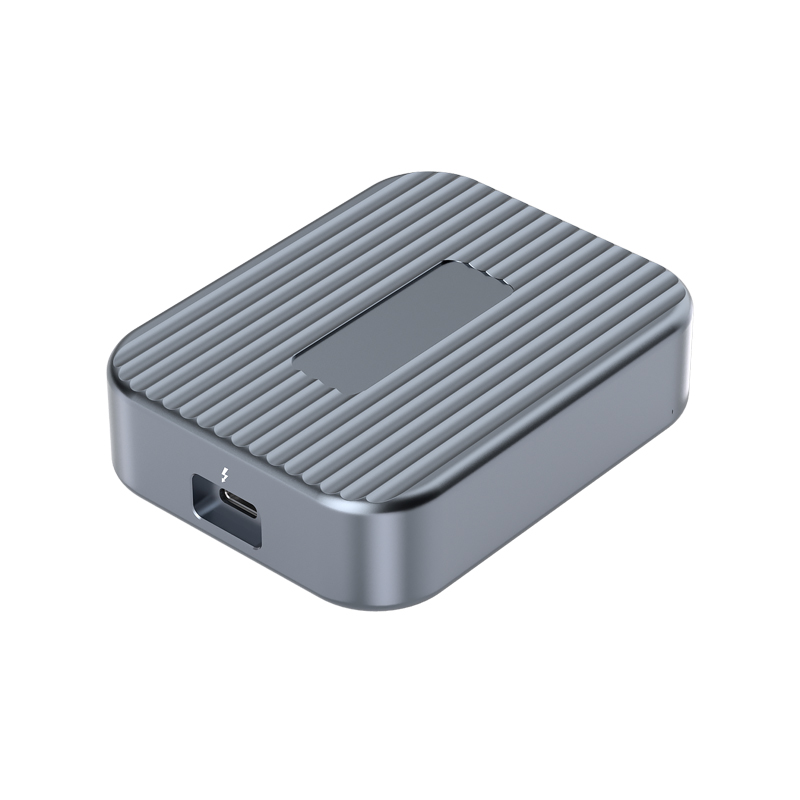
Enterprise Implementation: PURPLELEC PEC-DS019 Performance Verification
| Core Parameter |
Legacy USB-C Dock |
PURPLELEC PEC-DS019 (TB4) |
Technical Yield & Scenario |
| Physical Bandwidth |
5Gbps / 10Gbps |
40Gbps (Bidirectional Dynamic) |
Eliminates peripheral congestion and disconnections |
| Display Maximums |
4K@30Hz + 1080P |
Dual 4K@60Hz or Single 8K@30Hz |
Sustains lossless color spaces and high refresh rates |
| Data Protocol |
USB 3.2 Gen 1/2 |
PCIe 32Gbps + USB 3.2 Gen 2 |
Direct support for NVMe storage and 2.5G NICs |
| Video Architecture |
Internal MST Translation |
Native Thunderbolt/DP Downstream |
Bypasses translation latency for pixel-perfect output |
The DS019 is driven by a compliant Thunderbolt 4 controller. Its downstream port delivers 15W power to mobile devices and natively supports high-bandwidth daisy-chaining, providing a standardized hardware fix for complex desktop peripheral clusters.
Technical FAQ for laptop docking station Deployments
Q: Does connecting a Thunderbolt dock to a laptop that only supports full-function USB-C improve performance?
A: The dock triggers backward compatibility, which initiates a hard physical bottleneck. The dock downgrades to the USB-C protocol dictated by the host machine's motherboard limit. Dual screen output and data throughput revert to DP Alt Mode restrictions, failing to bypass the 10Gbps host ceiling.
Q: Why do base Apple Silicon chips (M1/M2/M3) only mirror dual external displays?
A: Base M-series chips feature a hardware architecture natively limited to a single external display stream, and macOS completely lacks native MST support. Achieving extended dual screens (independent outputs) requires higher-tier chips (Pro/Max/Ultra) paired with a Thunderbolt 4 dock equipped with dual video stream controllers.
Desktop topology stability dictates professional output efficiency and error tolerance. Eliminate hardware bottlenecks caused by restricted physical bandwidth protocols. Access the detailed technical whitepaper and secure thePURPLELEC PEC-DS019directly at the official Purplelec store.