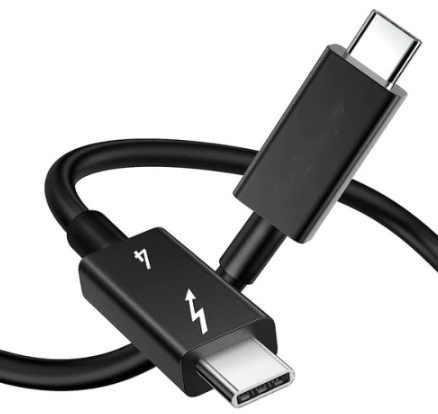
In modern B2B work environments, traditional dual-monitor setups are no longer sufficient for high-intensity workflows. For financial traders (monitoring candlestick charts and news feeds simultaneously), software developers (coding and multi-port debugging), control centers (multi-channel video feeds), and professional content creators, building a system with five or more displays is a core strategy for achieving a leap in productivity.
However, constructing a setup of this scale requires meticulous planning. It is essential to understand the core limitations of graphics hardware and the options available through high-performance USB expansion solutions.
Choosing Your Multi-Monitor Setup
If you intend to run five displays on a single computer, there are three primary connection methods:
1. Pure GPU-Driven Setup: Connect each monitor directly to the graphics card (via HDMI, DisplayPort, USB-C with Alt Mode, or Thunderbolt ports). This ensures optimal performance and minimal latency, but is strictly limited by the physical number of output ports on the host's graphics card.
2. Hybrid Setup (Highly Recommended): Connect the most performance-demanding monitors (such as primary monitoring screens or editing displays) to native GPU ports, and extend the remaining auxiliary screens (like dashboards or communication apps) via high-performance USB adapters or docking stations. This perfectly balances performance, compatibility, and budget.
3. Pure USB-Driven Setup: Rely entirely on DisplayLink or SiliconMotion (external graphics processing chip) technology.
Note: This approach is best suited for laptops (where the built-in screen is GPU-driven and external screens are expanded via USB); however, it is not recommended as the primary choice for desktop computers, as desktops should utilize native GPU processing for core outputs to ensure proper operation.
Understanding GPU Display Limits: The Hardware Foundation
The GPU (Graphics Processing Unit) is the cornerstone of any multi-monitor setup. Different types of host machines have varying maximum display capabilities:
∙ Integrated Graphics (Motherboard ports): Typically support a maximum of 3 displays (including the laptop's built-in screen).
∙ Consumer Dedicated Graphics: Usually support up to 4 external displays.
∙ Professional Workstation Graphics: Certain high-end models natively support 6 or more displays.
GPU-Driven Displays: The Gold Standard for B2B
GPU-driven displays communicate directly with the system's graphics core via HDMI, DP, USB-C with Alt Mode, or Thunderbolt ports.
∙ Pros: Utilizes full GPU power for rendering responsiveness; supports high refresh rates (120Hz or higher) and synchronization technologies; maintains extremely low CPU and memory load. It is the only viable option for gaming, 3D rendering, CAD, and professional video editing.
∙ Cons: Limited port quantity. Many laptops only provide one or two video output ports.
USB-Driven Displays: Bypassing Physical Port Limitations
When native GPU ports are fully occupied, DisplayLink and SiliconMotion technologies allow you to add more screens via standard USB-A or regular USB-C ports (which do not natively support video). Essentially, they use software and built-in adapter chips to convert CPU resources into graphical signal outputs.
∙ Pros: Completely bypasses host hardware port limitations; excellent cross-platform support (Windows, macOS including M1-M4 chips, Linux, ChromeOS).
∙ Cons and Limitations: Requires specific driver installation (or screen recording permissions); due to CPU-based processing, it is typically limited to a 60Hz refresh rate and introduces minor latency. Not recommended for intensive gaming or professional video editing.
System Requirements and Performance Considerations
Running multiple screens consumes significantly more resources than a standard dual-monitor setup. To avoid lag during high-intensity B2B tasks, adhere to the following minimum recommendations:
∙ Multi-4K setups require at least a modern quad-core CPU.
∙ The more screens and the higher the resolutions, the greater the load on the CPU/GPU.
∙ Power Delivery Check: When driving 5 or more displays, it is imperative to use a docking station with an independent, high-wattage PD charging interface (such as PURPLELEC models supporting 100W+ PD output) to ensure the laptop remains adequately charged even under full load.
Optimizing Your Setup & Best Practices
1. Prioritization (Critical): Place main financial trading charts, primary code editing windows, or 3D modeling interfaces on the native GPU output ports.
2. Supplementary Expansion: Use DisplayLink chip-based adapters to connect dashboards, communication software, documents, and other static content as auxiliary information screens.
Summary Recommendations
Expanding to 5 or more displays on a single system is highly achievable, but the key to success lies in balancing GPU-driven and USB-driven connections. For professional B2B procurement, rely on high-performance Thunderbolt docking stations to utilize the GPU wherever possible, supplemented by DisplayLink adapters for flexible auxiliary screen expansion.
FAQ: Multi-Monitor Setup Troubleshooting
Q: Why can my M3 (or base M1/M2) MacBook only connect to one external monitor?
A: This is a native hardware design limitation of Apple's base-level chips. To bypass this and connect 2 or more screens, standard Thunderbolt docks will not work. You must purchase a docking station or adapter specifically integrated with DisplayLink technology. This technology uses a combination of software and hardware to circumvent the physical display output limits of the chip.
Q: Can screens driven by USB adapters be used for stock trading or video editing?
A: For stock trading (static candlestick charts/news feeds), absolutely. For video editing, it is not recommended. Because USB adapters rely on CPU resources and introduce slight latency, they are perfect as secondary screens for arranging static information. However, for workflows like video editing that require real-time previews and precise frame synchronization, you must connect the display to the host's native GPU port.
Q: Will driving 5 monitors drain my laptop's battery?
A: Yes, if the power delivery setup is inadequate. Driving multiple screens consumes power natively, and connecting multiple peripherals saturates bandwidth and increases overall power draw. You must select an enterprise-grade docking station that not only supports multi-port output but also features an independent DC input or high-wattage PD input (e.g., 140W+). This ensures an adequate "power budget" to simultaneously drive auxiliary screens and charge the laptop at full speed.
Conclusion
As a technical team specializing in high-performance audio/video capture and transmission solutions, we understand that "stability" is paramount in enterprise multi-monitor configurations. Whether it's latency caused by a capture card or power deficits from a docking station, hardware failures directly impact B2B operational efficiency. The guide above is a set of best practices derived from our deep understanding of underlying hardware protocols (Thunderbolt 4, USB 3.2, DP Alt Mode) and extensive real-world testing.