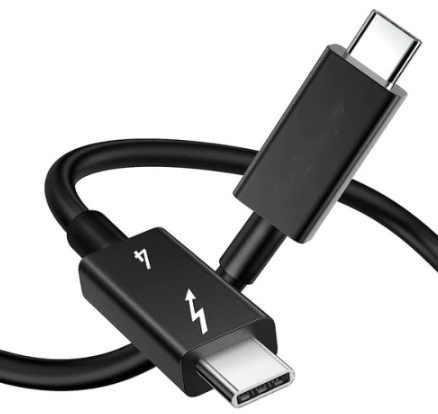
Modern ultrabooks trade I/O ports for portability, creating a hardware bottleneck for professionals requiring multi-monitor setups and le-gacy peripheral integration. When addressing this I/O deficit, the foundational question arises: what is a docking station for a laptop? It is not a basic signal splitter. It is a dedicated hardware controller leveraging high-bandwidth protocols (like Thunderbolt or USB4) to demultiplex a single host connection into independent video, audio, Ethernet, and data streams. This guide dissects the technical architecture of display expansion and bandwidth allocation.
Core Architecture: The Display Docking Station
The engineering value of a display docking station lies in protocol translation and bandwidth negotiation. When connected via a full-featured Type-C or Thunderbolt port, the host and the dock controller (e.g., Intel Goshen Ridge) negotiate lane allocation via Alt Mode.
Given a strict 40Gbps ceiling (Thunderbolt 4), the dock’s firmware prioritizes video output (DisplayPort data). Residual bandwidth is subsequently routed to PCIe and USB data. Consequently, saturating the bus with a high-speed NVMe drive while driving dual 4K monitors will mathematically throttle storage read/write speeds.
Laptop Dual Monitor Docking Station: MST vs. SST
Deploying a laptop dual monitor docking station exposes the primary compatibility fracture in modern hardware: the operating system's handling of Multi-Stream Transport (MST).
Windows OS: Natively supports MST. A single DisplayPort 1.4 connection can be split by the dock into two discrete 4K 60Hz video streams, enabling extended desktop mode across multiple external panels.
macOS: Apple Silicon (base M1/M2/M3) and macOS lack native support for MST daisy-chaining. Routing two monitors through a standard USB-C dock yields duplicated mirrored displays (SST mode). True extended dual displays require the discrete video pipelines of the Thunderbolt protocol or software-driven DisplayLink technology.
Docking Station Monitor Sync: The Bandwidth Limit
Configuring a docking station monitor matrix requires calculating the total bandwidth threshold. Resolution and refresh rate are constrained by the weakest link: the host port protocol, the dock's controller, or the cable standard.
| Interface Protocol |
Theoretical Max Bandwidth |
Video Bandwidth Allocation |
Display Support Limit (Typical) |
Target Use Case |
| USB-C 3.2 Gen 2 |
10 Gbps |
~5 Gbps |
Single 4K@60Hz |
Basic productivity |
| Thunderbolt 4 |
40 Gbps |
Up to 32 Gbps |
Dual 4K@60Hz or Single 8K@30Hz |
Content creation, dual-screen |
| Thunderbolt 5 |
80 Gbps (120Gbps Video Boost) |
Up to 120 Gbps |
Triple 4K@144Hz or Dual 8K@60Hz |
Pro workstations, heavy I/O |
Data Note: Actual output requires strict adherence to DisplayPort 2.1 or HDMI 2.1 cable specifications to minimize signal attenuation.
Hardware Limitations and Diagnostic Reality
1. Thermal Throttling: Operating at maximum capacity (Dual 4K + 100W PD charging + Gigabit Ethernet) pushes internal controller temperatures above 60°C. Inferior thermal designs trigger thermal throttling, manifesting as monitor flickering, signal drops, or USB peripheral disconnects.
2. Capture Card Latency: Routing high-bandwidth video capture cards through a dock's USB 3.0 ports often results in frame tearing and latency due to polling rate conflicts and bandwidth starvation. Critical low-latency peripherals demand direct motherboard connection.
Enterprise and Enthusiast Solutions
For financial analysts or video editors requiring triple high-refresh-rate displays (144Hz+), le-gacy 40Gbps protocols present a hard physical limit. Next-generation standards utilize asymmetric link technology to push video transmission bandwidth to 120Gbps.
The PURPLELEC PEC-TB9001 Thunderbolt 5 11-port triple docking station utilizes the Thunderbolt 5 architecture to bypass the constraints of multi-screen, high-resolution setups. By supporting PCIe Gen 4 and allocating superior video bandwidth, it drives three independent 4K 144Hz displays simultaneously without compromising external storage read/write velocities, serving as the definitive hardware solution for complex desktop I/O topologies.
Frequently Asked Questions (FAQ)
Q1: Why does my second monitor only mirror the first one when connected to the dock?
A: This indicates a hardware or software limitation: either the host system is macOS (which restricts MST), or the Windows laptop's Type-C port does not support dual video streams. Upgrading to a Thunderbolt-certified dock and host resolves this.
Q2: Will any USB-C port support a display docking station?
A: No. The laptop’s USB-C port must specifically support DisplayPort Alt Mode or be a certified Thunderbolt port. Data-only USB-C ports cannot transmit video signals.