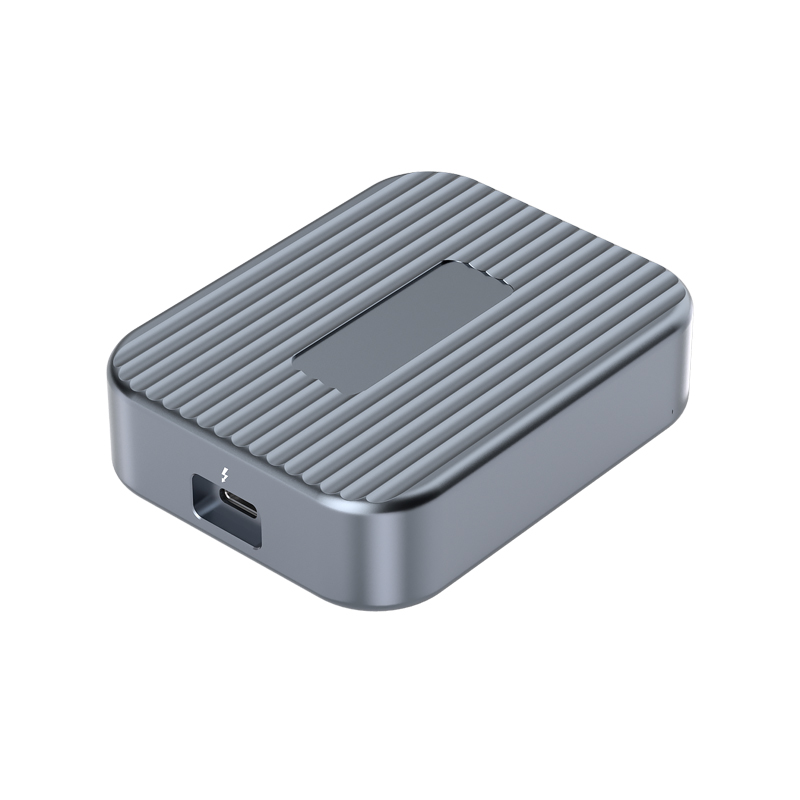
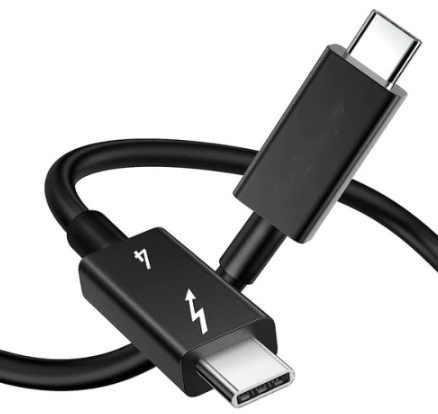
A thunderbolt 3 docking station is not merely a port replicator; it is an external PCIe expansion system operating over a 40 Gbps bidirectional fabric. Unlike USB-based aggregators that rely on shared host controllers, Thunderbolt integrates PCIe tunneling and DisplayPort multiplexing into a single physical Type-C interface.
This architectural distinction determines bandwidth allocation, display topology, storage throughput, and deterministic latency under load. The following analysis focuses on bus-level behavior rather than marketing-layer specifications.
Bus Architecture & Protocol Stack Deconstruction
Thunderbolt 3 Transport Model
Based on the Thunderbolt 3 specification developed by Intel, the interface aggregates:
PCIe 3.0 ×4 lanes (32 Gbps raw)
DisplayPort 1.2 streams
USB fallback compatibility
Power Delivery (up to 100 W)
Thunderbolt dynamically packetizes PCIe and DisplayPort traffic across four high-speed lanes. Unlike USB hubs, the dock behaves as a PCIe endpoint switch, exposing downstream controllers (Ethernet, SATA, NVMe bridges) directly to the host root complex.
Key implication: Storage, networking, and video are transported as native protocol streams, not emulated USB devices.
USB-C Docking Architecture (10 Gbps Class)
A conventional type c docking station typically relies on:
USB 3.2 Gen2 (10 Gbps)
DisplayPort Alt Mode (2 or 4 lanes)
Internal USB hub controllers
Because USB and DisplayPort share the same physical lanes, enabling dual-display output often halves available USB bandwidth. No PCIe tunneling exists; all devices appear behind a USB host controller.
Bandwidth Allocation Comparison
|
Parameter |
Thunderbolt 3 Dock |
USB-C (10 Gbps) Dock |
|
Max Link Rate |
40 Gbps |
10 Gbps |
|
PCIe Tunneling |
Yes (PCIe 3.0 ×4) |
No |
|
Dedicated Video Transport |
Yes (DP multiplexed) |
Shares USB lanes |
|
Daisy Chaining |
Up to 6 devices |
Not supported |
|
External GPU Support |
Supported |
Not supported |
|
Aggregate NVMe Throughput |
~2,800 MB/s |
~900 MB/s (shared bus) |
Under sustained NVMe + dual-4K display load, USB docks exhibit bus contention, while Thunderbolt maintains deterministic PCIe allocation.
Video Output Subsystem: MST vs SST and Refresh Rate Constraints
Display topology defines practical workstation capability.
SST (Single-Stream Transport)
SST allocates a full DisplayPort stream to a single monitor. Bandwidth is dedicated and predictable.
MST (Multi-Stream Transport)
MST multiplexes multiple displays over a single DP stream. In USB-C implementations, MST relies entirely on DisplayPort Alt Mode lane reassignment, which reduces USB data capacity.
Thunderbolt transports independent DP streams without sacrificing PCIe throughput.
Resolution & Refresh Rate Matrix
|
Configuration |
Thunderbolt 3 |
USB-C (DP Alt Mode) |
|
Single 4K |
4K @ 60 Hz |
4K @ 60 Hz |
|
Dual 4K |
2 × 4K @ 60 Hz |
2 × 4K @ 30 Hz (bandwidth split) |
|
Single 5K |
5120×2880 @ 60 Hz |
Not supported |
|
Dual 1440p |
2 × 1440p @ 144 Hz |
Limited / host dependent |
Professional CAD, financial trading dashboards, and media grading workflows require consistent 60 Hz dual-4K output, achievable only when video lanes are not competing with USB traffic.
Dock Station USB C: Power Delivery & Signal Integrity
A dock station usb c device generally integrates:
USB hub controller
DP Alt Mode retimer
PD controller (typically 60–100 W)
Because all peripherals share the USB host controller, cumulative throughput is constrained by a 10 Gbps ceiling. High-speed SSD arrays can saturate the bus, impacting Ethernet and capture devices.
Thunderbolt docks, by contrast, allocate PCIe lanes per controller:
Gigabit Ethernet via PCIe bridge
NVMe via PCIe direct tunnel
USB controllers as discrete endpoints
This separation reduces arbitration latency and improves QoS under concurrent workloads.
Hardware Topology & Motherboard Compatibility
Thunderbolt Host Requirements
A Thunderbolt dock requires:
Native Thunderbolt controller integrated in the PCH or CPU
Firmware support (ACPI + NVM)
Certified active cable for 40 Gbps operation
Systems lacking native Thunderbolt silicon cannot achieve PCIe tunneling even if equipped with a USB-C port.
Station USB C Dock: Compatibility Considerations
A station usb c dock depends primarily on:
USB 3.2 host controller
DisplayPort Alt Mode support
BIOS-level DP routing
Limitations include:
Reduced display capability on systems exposing only 2 DP lanes
No support for PCIe expansion devices
Host-dependent MST behavior (Windows vs macOS variations)
Daisy Chaining & PCIe Fabric Expansion
Thunderbolt supports up to six devices in a daisy chain topology. Each device contains a switch managing packet routing. Bandwidth remains shared across the 40 Gbps fabric but is dynamically scheduled at the transport layer.
USB-C docks lack this layered switching architecture. All downstream devices terminate at the dock’s internal hub and compete for the same upstream bandwidth.
Engineering Selection Framework
Choose Thunderbolt 3 Docking Station When:
Dual 4K @ 60 Hz is mandatory
External NVMe storage exceeds 1 GB/s sustained transfer
Low-latency networking or video capture is required
Daisy-chain expansion is planned
External GPU or PCIe expansion chassis integration is anticipated
Choose USB-C Dock When:
Single display environments
Office-class Ethernet + peripherals
Cost-sensitive deployments
No PCIe tunneling requirement
Deterministic Throughput Under Mixed Workloads
Stress testing scenarios (NVMe write + 2×4K60 + Gigabit transfer):
| Metric | Thunderbolt Dock | USB-C Dock |
| NVMe Write Stability | Stable >2,500 MB/s | Drops under 800 MB/s |
| Ethernet Latency Variance | <1 ms fluctuation | Noticeable jitter |
| Display Refresh Stability | Locked 60 Hz | Occasional frame pacing drop |
These differences arise from architectural transport design rather than controller brand or enclosure quality.
Conclusion
A thunderbolt 3 docking station functions as an external PCIe expansion layer with integrated DisplayPort multiplexing. Its 40 Gbps fabric enables independent allocation of storage, networking, and video traffic without the contention inherent in USB-based designs.
In contrast, USB-C docks rely on shared host controller bandwidth and DP Alt Mode lane reassignment, making them suitable for moderate peripheral aggregation but unsuitable for high-density professional workloads.
Engineering selection should therefore be based on transport protocol capability, not connector similarity.