What is a video capture card?
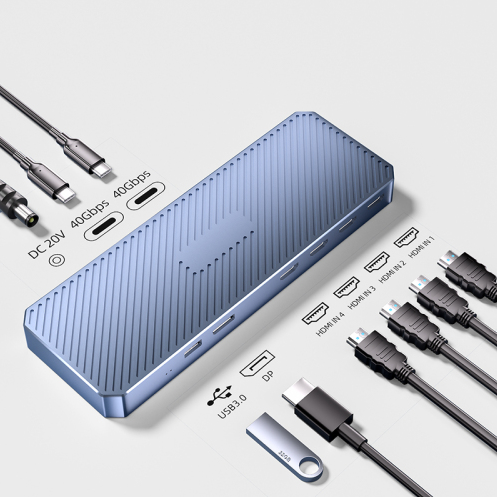
A video capture card is a hardware interface device designed to convert external video signals into a digital data stream that can be processed by a computer. In essence, it is a dedicated hardware module equipped with a video input interface, signal processing chips, and a host interface controller.
Core Definition Breakdown
| Component Module |
Technical Function |
| Video Input Interface |
Receives video signals such as HDMI / SDI / DVI / VGA. |
| Decoding Chip |
Converts input signals into a digital video data stream. |
| Buffer Module |
Manages frame buffering and data queuing. |
| Host Interface |
Transmits data to the computer via PCIe or USB. |
Signal Flow Diagram
Video Source → Capture Card → Host Interface → Software Encoding/Processing
Device Form Factor Classification
| Type |
Connection Interface |
Typical Application Scenarios |
| Internal PCIe |
PCI Express |
Professional live streaming, broadcast-grade production. |
| External USB |
USB 3.x / USB-C |
Mobile live streaming, portable deployment. |
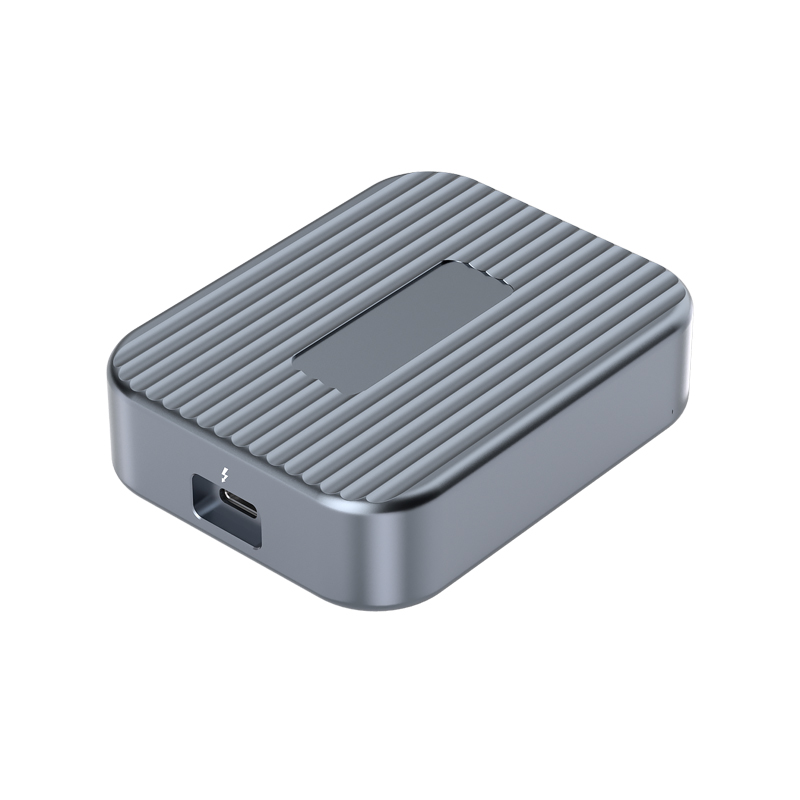
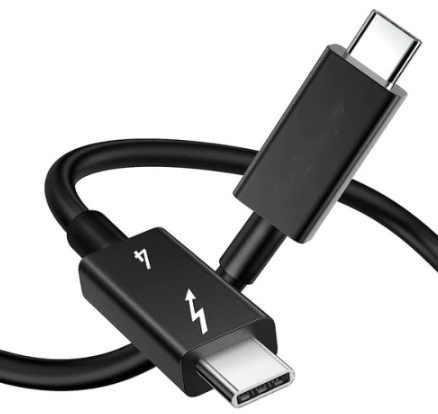
| Thunderbolt |
PCIe Tunneling |
High-bandwidth, low-latency capture. |
What does a video capture card do?
A video capture card performs the following core tasks:
1. Receives external video source signals.
2. Decodes and converts color spaces.
3. Manages frame buffering and clock synchronization.
4. Executes data compression (optional).
5. Transmits high-speed data to the host.

I. Video Signal Reception and Format Identification
The capture card first identifies the input video parameters:
- Resolution (720p / 1080p / 4K)
- Frame Rate (30fps / 60fps / 120fps)
- Color Space (RGB / YUV 4:2:2 / 4:4:4)
- Bit Depth (8-bit / 10-bit)
The hardware determines the input mode via EDID or signal handshake protocols.
II. Decoding and Pixel Data Recombination
HDMI or SDI signals are essentially serial transmission signals. The capture chip executes:
- Chroma Subsampling Restoration
The processing result is standard Frame Buffer data.
III. Frame Buffering and Data Queuing Mechanism
High-resolution video demands extremely high bus bandwidth.
Calculation of uncompressed data volume for 4K60 8-bit 4:2:2:
3840 × 2160 × 60 × 16 bits ≈ 7.96 Gbps
To avoid instantaneous host bandwidth congestion, the capture card internally utilizes:
- DMA (Direct Memory Access)
- Multi-channel Data Queues
This mechanism significantly reduces the CPU interrupt frequency.
IV. Hardware Encoding and Host Load Reduction Mechanism
Some capture cards integrate hardware encoders (H.264 / H.265).
| Processing Mode |
CPU Usage |
Latency |
Applicable Scenarios |
| Pure Capture (Uncompressed) |
High |
Extremely Low |
Professional Production |
| Hardware H.264 Encoding |
Low |
Medium |
Live Streaming |
| Hardware H.265 Encoding |
Lower |
Medium |
Bandwidth-constrained Scenarios |
Core Offloading Mechanisms:
- The ASIC encoder undertakes the compression task.
- Reduces host CPU computing pressure.
- Reduces PCIe / USB bandwidth pressure.
- Improves overall system stability.
V. Host Interface Bandwidth Comparison
| Interface Type |
Theoretical Bandwidth |
Actual Usable Bandwidth |
Suitable Resolution |
| USB 3.0 |
5 Gbps |
~3.5 Gbps |
1080P60 |
| USB 3.2 Gen2 |
10 Gbps |
~7 Gbps |
4K30 |
| PCIe Gen3 x4 |
32 Gbps |
~28 Gbps |
4K60 Uncompressed |
Summary of Key Technical Parameters
| Parameter |
Description |
| Max Resolution |
The highest supported input format. |
| Pass-Through |
Whether signal loop-out is supported. |
| Color Sampling |
4:2:0 / 4:2:2 / 4:4:4 |
| HDR Support |
HDR10 / HLG |
| Encoding Format |
H.264 / H.265 / MJPEG |
| Latency |
Delay from capture to software display (ms). |
System Role Positioning of Video Capture Cards
In a complete video link, its role is the Signal Acquisition Node.
It is NOT responsible for:
It IS responsible for:
- Data structure conversion
- Hardware-level load offloading
Conclusion
Addressing the two core questions:
What is a video capture card?
It is a dedicated hardware interface device that converts external video signals into a digital data stream processable by a computer.
What does a video capture card do?
It performs video signal reception, decoding, buffering, compression, and high-speed transmission, while utilizing hardware mechanisms to reduce host load and bandwidth pressure.
In high-resolution video production, live streaming, medical imaging, and industrial vision systems, the video capture card remains the core hardware component for achieving stable data acquisition and system decoupling.