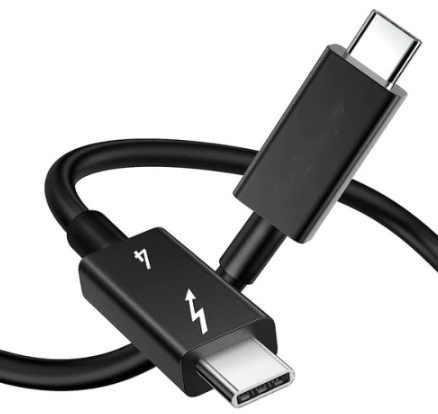
Modern ultrabooks are constrained by physics. Thin chassis designs eliminate Ethernet PHYs, HDMI retimers, and multiple USB controllers. The result is immediate friction: unstable Wi-Fi in dense offices, incompatible presentation ports, and constant adapter swapping.
This is not a user behavior problem. It is an I/O topology problem.
The Physical Bottleneck of Modern Chassis Design
Reducing thickness limits:
- EMI shielding for high-speed lanes
- Thermal budget for auxiliary controllers
Enterprise workflows feel the impact first. Network imaging requires Ethernet. Conference rooms still depend on HDMI. Field diagnostics still rely on USB-A devices. The absence of these ports introduces failure points that software cannot resolve.
Centralizing Connectivity: The Hub Architecture
A USB-C docking station centralizes peripheral management by terminating all external interfaces at a single, powered aggregation point.
Key distinctions:
1. Passive dongles rely entirely on host power and expose minimal interfaces.
2. Powered docking stations contain independent controllers, stable clocks, and dedicated PD negotiation.
The practical result is a single-cable solution that reduces setup time by approximately 90% by collapsing power, data, video, and network initialization into one handshake.
Bandwidth Management and Stability
Not all docks behave identically under load. Display configuration, storage access, and network traffic compete for finite bandwidth. Selecting blindly often leads to intermittent Ethernet drops or degraded data transfer rates.
Choosing the right specification requires understanding how USB, DisplayPort Alt Mode, and Thunderbolt allocate lanes and enforce minimums, which is why readers evaluating advanced setups should consult the [Technical Guide to USB-C Docking Station Protocols] for a protocol-level breakdown before deployment.
Deployment in Hybrid Work Environments
In hot-desking scenarios:
1. Fixed docks remain on desks
2. Users connect personal or corporate laptops via a single cable
3. Power state, displays, and peripherals initialize deterministically
This model reduces wear on laptop ports, simplifies IT asset management, and standardizes desk capability regardless of user device generation.
Summary
A USB-C docking station should be selected based on workflow constraints, peripheral mix, and host protocol support. Port scarcity is structural. Effective expansion requires matching interface architecture to real-world usage, not assuming connector equivalence.