A USB-C docking station is not a passive port replicator. It is an active interface system composed of multiple controllers: a USB bridge chipset responsible for downstream data aggregation, a DisplayPort or Thunderbolt retimer/multiplexer handling high-speed lanes, and an independent Power Delivery (PD) controller managing voltage and current negotiation. Functional capability varies widely because total available bandwidth, video routing, and charging behavior are dictated by the host-side protocol exposed over the USB-C connector, not by the connector itself.
The same physical USB-C port may operate as USB 3.2 Gen 1, USB 3.2 Gen 2, USB4, or Thunderbolt. Each mode imposes different lane allocation rules, directly affecting display resolution, peripheral throughput, and susceptibility to bandwidth bottlenecks.
Protocol Architecture: USB-C vs. Thunderbolt
USB-C defines the connector and pinout. It does not define performance. Performance is governed by the negotiated protocol stack.
Lane Allocation Fundamentals
A USB-C cable exposes four high-speed differential lanes. How those lanes are assigned is protocol-dependent.
| Host Protocol | Lane Allocation Model | Aggregate Throughput | Practical Implications |
| USB 3.2 Gen 1 | 2 lanes data | 5 Gbps | No native video without DisplayPort Alt Mode |
| USB 3.2 Gen 2 | 2 lanes data | 10 Gbps | Video requires sacrificing data lanes |
| DP Alt Mode (USB 3.x) | 2 lanes DP + 2 lanes USB | ~10 Gbps data + DP video | Shared bandwidth, common congestion point |
| Thunderbolt 3 | 4 lanes dynamic | 40 Gbps | PCIe + DisplayPort tunneling |
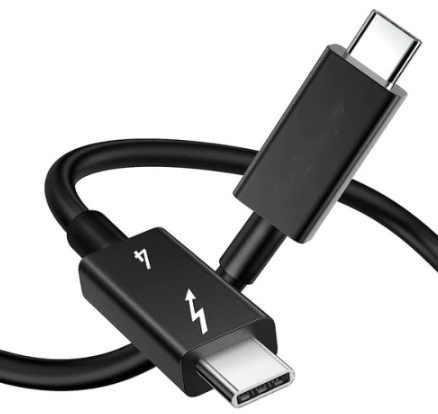
| Thunderbolt 4 | 4 lanes dynamic (mandatory mini-mums) | 40 Gbps | Enforced dual 4K display and DMA protection |
In a non-Thunderbolt USB-C docking station, activating DisplayPort Alt Mode typically reallocates two lanes from USB data to video. The root cause of reduced data transfer rates under load is structural, not firmware-related. Video traffic is prioritized at the physical layer.
Thunderbolt 3 vs 4 differs less in raw throughput and more in guarantees. Thunderbolt 4 enforces mini-mum PCIe bandwidth, dual-display capability, and hub support, eliminating ambiguous configurations common in Thunderbolt 3 ecosystems.
Power Distribution Logic
Power behavior is controlled by a dedicated PD controller operating independently from data and video paths.
Passthrough Charging vs. Bus-Powered Designs
Bus-powered docks draw power from the host. They are limited to 7.5–15 W downstream and cannot sustain high-load peripherals.
Passthrough-powered docks accept external DC input and negotiate upstream power delivery back to the host.
PD Negotiation Mechanics
Power Delivery (PD) 3.0 supports fixed voltage profiles up to 20 V × 5 A (100 W). PD 3.1 extends this to Extended Power Range (EPR), enabling up to 240 W using 28 V, 36 V, or 48 V profiles.

Negotiation sequence:
1. Sink (laptop) advertises required power.
2. Source (dock) validates capability.
3. Contract is established before data lanes fully initialize.
Insufficient PD headroom results in throttling under sustained CPU or GPU load, often misattributed to thermal issues.
Video Signal Transmission: MST and Alt Mode
DisplayPort Alt Mode Constraints
DisplayPort Alt Mode tunnels native DP signals over USB-C lanes. Resolution limits are governed by:
DP version supported by the host GPU
Lane count allocated to video
Use of Display Stream Compression (DSC)
HDMI outputs on many docks are not native. They rely on DP-to-HDMI protocol converters, introducing additional latency and potential compatibility limits, especially beyond HDMI 2.0 data rates.
MST (Multi-Stream Transport)
MST allows multiple displays to be driven from a single DisplayPort link by time-slicing bandwidth.
The limitation is OS-level. macOS requires separate display pipelines, which is why dual-display support on Apple systems often mandates Thunderbolt-based docks with discrete display controllers.
Bandwidth Bottlenecks and Root Causes
Common failure patterns follow a predictable chain:
High-resolution displays consume fixed lane bandwidth
Remaining USB lanes saturate under SSD or Ethernet load
Isochronous devices (audio/video) experience jitter or dropouts
The hardware solution is not higher-rated cables or firmware updates, but selecting a USB-C docking station whose host protocol matches the workload profile.
Conclusion
A USB-C docking station is only as capable as the protocol negotiated with the host. Understanding lane allocation, Power Delivery negotiation, MST behavior, and Thunderbolt enforcement levels is essential for compatibility matching. Interface constraints are architectural. Correct selection is an engineering decision, not a cosmetic one.