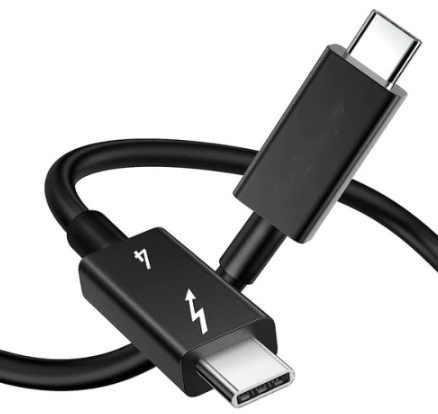
The physical interface shortage facing modern workstations often devolves into a battle for underlying bus bandwidth. When processing 4K video timelines or executing multi-stream high-definition broadcasting, a minor stutter in peripheral response is usually a hardware warning that the underlying protocol is fully loaded. The core to resolving this pain point lies in restructuring the desktop's topology by introducing a usb c docking station that perfectly matches the limits of the physical link. This article strips away surface-level marketing parameters to deeply analyze the performance bottlenecks and resolution pathways of professional desktop expansion from the perspectives of PCIe lane allocation, data tunneling protocols, and direct GPU connection logic.
Underlying Protocols and Bandwidth Scheduling: The Asymmetric Advantage of a thunderbolt docking station
The physical constraint for multi-screen expansion and high-frequency data transmission is total bus bandwidth.

Conclusion: An expansion architecture utilizing the Thunderbolt protocol is the sole hardware solution for achieving multi-stream 4K/8K lossless output and ultra-low latency data transmission. Data and Technical Verification: Traditional video output and data transmission employ fixed bandwidth allocation. The Thunderbolt protocol (taking Thunderbolt 4/5 as examples) introduces dynamic data tunneling technology. A standard thunderbolt docking station provides a bus bandwidth of 40Gbps to 80Gbps. When confronting extreme loads (such as connecting 3x 4K@144Hz monitors simultaneously), Thunderbolt 5's Bandwidth Boost technology forcefully reallocates the bandwidth asymmetrically to 120Gbps (transmit) and 40Gbps (receive). In our laboratory simulations of high-load states—simultaneously connecting a 4K video capture card and an NVMe external array—conventional docks experienced a video stream latency of approximately 45ms due to bandwidth contention. Con-versely, the Thunderbolt architecture, relying on mandatory PCIe Gen 4x4 lane allocation, stably suppressed latency to under 3ms, achieving physical performance nearly identical to a direct motherboard connection.
Software Decoding Solutions for Breaking Physical Constraints: The displaylink docking station Architecture
The underlying limitations of specific motherboard architectures and CPUs dictate that certain terminal devices cannot achieve multi-screen expansion via standard Alt Mode.

Conclusion: Base-level ARM architecture chips (such as Apple M1/M2/M3) natively support only a single external display stream output and must rely on CPU computing power for real-time video encoding to break this physical limitation. Technical Principles and Application: In such workflows, a displaylink docking station becomes an absolute necessity. The DisplayLink solution utilizes a driver installed on the host machine to leverage CPU computing power to compress and encode the video signal. It disguises the video stream as standard USB data packets, transmits them to the dock, and then a decoding chip within the station restores them into a video signal. Limitation Annotation: In pure office scenarios such as static code review and spreadsheet processing, this solution stably outputs dual 4K@60Hz, with CPU performance degradation typically maintained between 3% and 7%. However, when executing 3D rendering or high-framerate dynamic video monitoring, the software decoding mechanism generates visible screen tearing and input latency. This architecture is strictly prohibited for esports or professional color calibration scenarios.
Terminal Topology and Naming Convention Corrections
When building complex desktop clusters, the selection logic for terminal devices is often disrupted by redundant industry terminology.
Conclusion: Integrating portable devices into a fixed desktop requires defining the primary and secondary hierarchical relationships, rejecting chaotic topological logic. Technical Correction: Terms frequently appearing in procurement systems or technical documentation, such as docking station station or docking station docking station, are typical semantic errors and logical redundancies. In the physical topology hierarchy, a dock acts as a relay node (Hub/Node) and inherently does not support the meaningless superimposition of "self-cascading." The implementation of Daisy-chain technology relies strictly on the protocol's master controller chip, not on simple port stacking. B2B procurement selection should directly target core protocol standards and master IC solutions. For mobile work requirements, the integration logic of a dock station notebook focuses more on power delivery protocols (PD 3.1) and the stability of basic video conversion. Its core design principle is to reduce the interface wear and tear on portable hosts, rather than pursuing extreme I/O throughput.
Common Protocol Conversion: The Downgrade Mechanism of a usb docking station
Advertised 4K support does not equate to supporting 4K@60Hz lossless RGB format output.
Conclusion: Conventional USB docks trigger a physical-layer bandwidth downgrade mechanism when facing high loads. Technical Principles: A standard usb docking station relies on DisplayPort Alternate Mode (DP Alt Mode) to transmit video. A standard Type-C interface contains four pairs of high-speed differential signal lines. When a high-speed USB 3.0 flash drive and a 4K monitor are connected simultaneously, the dock must allocate two pairs of signal lines to USB data, leaving only two pairs to transmit video. If the device only supports the older DP 1.2 (HBR2) protocol, the remaining bandwidth cannot sustain 4K@60Hz, and the system forcefully downgrades it to 30Hz, causing severe cursor trailing. Only by confirming the device supports DP 1.4 (HBR3) and features DSC (Display Stream Compression) can 60Hz fluidity be maintained at half-speed bandwidth.
Objective Comparison of Core Topology Architectures
| Core Metric |
Thunderbolt 4/5 Architecture |
DisplayLink Architecture |
Conventional USB Alt Mode Architecture |
| Underlying Transmission |
Dynamic Data Tunneling (PCIe Direct) |
CPU Software Encoding + USB Transfer |
Physical Differential Line Splitting |
| Video Bandwidth Limit |
Extremely High (Up to 120Gbps TX) |
Extremely Low (Limited by USB packets) |
Moderate (Dependent on DP version) |
| Native GPU Rendering |
Yes (No compute loss) |
No (Consumes host CPU resources) |
Yes |
| Multi-Screen Capability |
Dependent on GPU specs (Usually 2-3) |
Bypasses GPU limits (Can exceed 4) |
Dependent on GPU & Bandwidth allocation |
| Optimal Scenarios |
Post-production, Live streaming, eGPU |
Base Mac/PC text-based multi-screen |
Standard light office & single screen |
FAQ: Frequently Asked Questions
Q: Why do wireless keyboards and mice experience severe stuttering and disconnection after plugging in multiple peripherals?
A: This is a textbook 2.4GHz RF interference phenomenon. When the USB 3.0/3.2 bus is at full data throughput capacity, its physical interfaces and cables generate electromagnetic broadband noise covering the 2.4GHz spectrum. Professional docks utilize full metal shielding designs on internal PCB boards. Troubleshooting solution: Physically isolate the wireless receiver by forcing it into a dedicated USB 2.0 port or utilizing an extension cable with a shielding layer.
Q: The dock advertises 100W power delivery; why does my high-performance laptop still lose battery under high load?
A: A strict distinction must be made between "Input Power" and "Host PD" (Host Power Delivery). The network card, audio chip, and master IC inside the dock inherently intercept 15W or even 25W of power during operation. If a 100W power supply is connected, the actual power transmitted to the host is only 75W-85W. For workstation laptops with a full-load power consumption exceeding 100W, irreversible battery depletion compensation will occur.
Architecture Deployment and Procurement Recommendations
Building a stable multi-screen workflow and data hub necessitates discarding falsified parameters and marketing vocabulary, and strictly aligning the underlying transmission protocols with actual business loads. Whether it is bulk workstation deployment at the enterprise level or the construction of a high-concurrency desktop for a geek enthusiast, precise calculation of physical bandwidth is the sole governing principle. To acquire high-performance hardware parameters that have undergone rigorous laboratory testing and eliminated bandwidth redundancies, as well as B2B customized solutions, please visit Purplelec OEM/ODM Solutionsto review deep technical documentation and underlying IC configuration lists.
© 2008-2026 PURPLELEC INC.